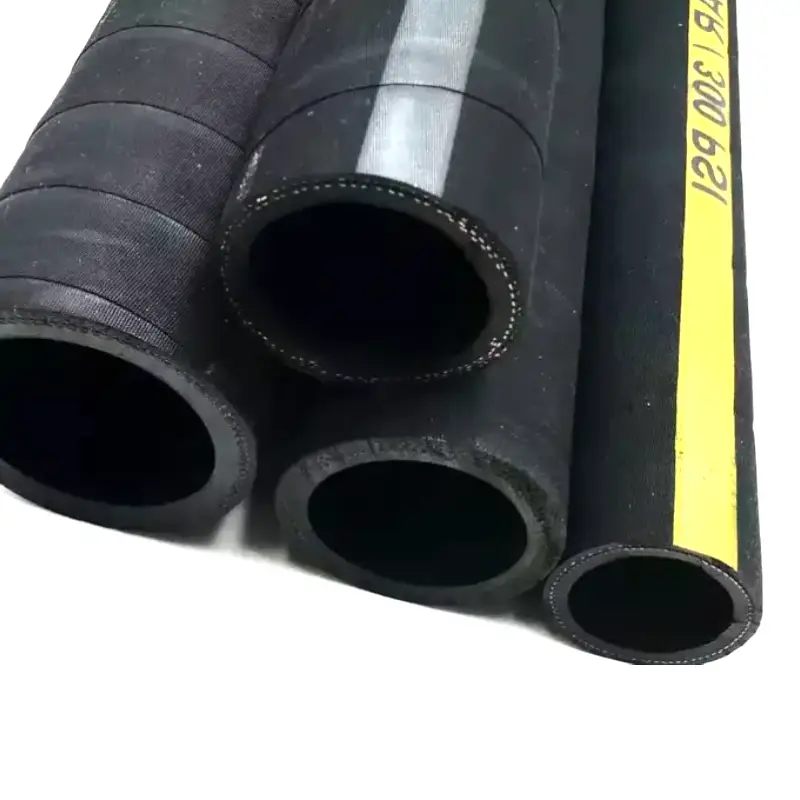
Hydraulic hose manufacturers are adopting technologies including smart sensors, AI inspection, advanced composite reinforcement, thermoplastic materials, automated production, and digital traceability systems. Since 2020, manufacturers have focused on improving pressure capability, reducing weight by 20–40%, extending service life by 30–50%, and supporting predictive maintenance in industries such as construction, mining, aerospace, and industrial automation.
Hydraulic hose production is changing as equipment manufacturers require higher pressure ratings, longer service intervals, and better resistance to temperature, chemicals, and mechanical stress. Traditional rubber hoses with steel reinforcement remain widely used, but new designs are adding advanced materials and digital systems to meet modern hydraulic requirements.
Hydraulic systems used in excavators, agricultural machines, offshore equipment, and factory automation often operate under pressure levels above 35 MPa, with some specialized applications exceeding 70 MPa. Hose manufacturers are improving reinforcement structures and material combinations to handle repeated pressure cycles without reducing flexibility.
One major development is the use of advanced reinforcement materials. Conventional hoses usually rely on braided or spiral steel wire layers, but manufacturers are testing aramid fiber, polyester yarn, and composite reinforcement to reduce weight while maintaining strength.
| Reinforcement type | Main feature | Typical application |
|---|---|---|
| Steel wire | High pressure resistance | Construction equipment, mining |
| Aramid fiber | Lower weight, high tensile strength | Mobile hydraulic systems |
| Polyester fiber | Flexible and cost-efficient | Industrial equipment |
| Composite layers | Balance between strength and weight | Advanced machinery |
Compared with steel reinforcement, fiber-based hydraulic hoses can reduce weight by around 20–40% while improving bending flexibility. In mobile equipment produced after 2020, lighter hydraulic components help reduce fuel consumption and improve machine efficiency.
Material improvement has also become an important research area. Hydraulic hose manufacturers are developing new elastomer compounds that perform better under extreme operating conditions. Nitrile rubber (NBR) is still common because of its oil resistance and affordability, but hydrogenated nitrile rubber (HNBR), fluorocarbon rubber (FKM), and thermoplastic polyurethane (TPU) are increasingly used.
HNBR-based hoses can maintain stable mechanical performance at temperatures around 150°C, while FKM materials provide stronger chemical resistance for aerospace and industrial applications. TPU hoses are often selected when abrasion resistance and repeated bending are required.
New rubber formulations often include additives such as silica nanoparticles, carbon-based materials, and other reinforcement fillers. Research published after 2018 has shown that optimized filler systems can improve tensile strength and wear resistance by approximately 10–30% compared with standard rubber compounds.
Manufacturing processes are also becoming more automated. Hydraulic hose factories are replacing many manual inspection steps with robotic equipment, automated extrusion lines, and digital process control systems. These systems monitor rubber thickness, wire positioning, curing temperature, and production speed during manufacturing.
Automation improves consistency because small production differences can affect hose performance. In high-volume manufacturing environments, automated inspection systems introduced between 2019 and 2025 have helped reduce surface defects and improve production efficiency by more than 40% in some applications.
Modern production lines collect data from sensors installed on extrusion machines, braiding equipment, and curing systems. Temperature, pressure, vibration, and material flow information can be analyzed to maintain stable production conditions.
Artificial intelligence-based inspection is another technology being adopted. Machine vision cameras can identify surface cracks, uneven coating, bubbles, and reinforcement exposure during production. Compared with traditional manual checks, AI inspection provides faster evaluation and can operate continuously throughout the production process.
A growing number of manufacturers are also developing smart hydraulic hoses. Traditional hoses usually provide no information about internal conditions before failure. Smart hose designs add sensors that measure pressure, temperature, vibration, and service conditions.
A sensor-equipped hydraulic hose can send operating information to maintenance software, allowing operators to replace components based on actual usage conditions instead of fixed replacement schedules. Some industrial systems using condition-based maintenance have reported maintenance cost reductions of 20–40%.
This technology is especially useful in mining, offshore platforms, and large construction equipment. A hydraulic hose failure in these environments can stop machinery operation and create expensive downtime. Early condition information helps maintenance teams plan service work more efficiently.
Digital identification systems are also becoming more common. Manufacturers are adding QR codes, RFID tags, and digital records to hydraulic hose assemblies. These systems store information such as production date, material batch, pressure rating, and inspection history.
For international buyers searching for reliable suppliers, selecting a qualified hydraulic hose manufacturer in China often involves checking production technology, quality control processes, certification records, and material capability rather than only comparing product prices.
Environmental requirements are encouraging manufacturers to develop more sustainable hose designs. Many companies are researching recyclable thermoplastic materials and reducing waste during production. Thermoplastic hydraulic hoses are gaining attention because they are lightweight, corrosion-resistant, and suitable for applications where traditional rubber hoses may require frequent replacement.
Aerospace systems, electric vehicles, and automated machines are increasing demand for lightweight hydraulic components. Since 2021, thermoplastic hose applications have expanded in industries where weight reduction and material efficiency are important factors.
Digital twin technology is another emerging area. Engineers can create virtual models of hydraulic hose assemblies and analyze stress distribution, pressure changes, and bending cycles before producing physical samples. This reduces development time and allows manufacturers to compare different designs more efficiently.
Simulation tools are especially useful for high-pressure hoses because failure often depends on multiple factors, including reinforcement angle, rubber properties, temperature, and repeated movement. By using computer modeling, manufacturers can optimize designs before large-scale production.
The development of electric and automated machinery is also changing hydraulic hose requirements. New equipment designs often need smaller, lighter, and more reliable hydraulic components. Manufacturers are responding with compact hose structures, improved connectors, and materials designed for longer operating periods.
Between 2020 and 2025, industrial customers increasingly requested hydraulic components with higher reliability ratings, improved traceability, and compatibility with digital maintenance platforms. Hose manufacturers are therefore combining material science, automation, and data technologies in product development.
Future hydraulic hoses will continue moving toward intelligent monitoring, lightweight construction, and improved environmental performance. Manufacturers that combine advanced materials, automated production, and digital management systems will be better prepared for industries requiring safer and more efficient hydraulic systems.